TL;DR: You can handle minor, clean-water spills on hard surfaces yourself if the water source was unambiguously clean and the area dried within 24 hours. Flood water is different. Any water that entered your home from outside, overflowed a toilet or drain, or sat long enough to wick into walls and carpet padding is contaminated and carries real health risks. That water requires protective gear, proper extraction equipment, and in most cases professional remediation.
You just watched water come in under your door, up through a floor drain, or pour in through a window during a storm. Now you are standing in it, wondering if you can just rent a wet-vac and handle this yourself. That is a fair question, and the honest answer depends on one thing above everything else: where did the water come from?
Is flood water safe to clean up yourself?
Flood water is not safe to handle without protective gear, and in most cases it is not appropriate for DIY cleanup at all. Water that enters a home from outside, including storm runoff, rising groundwater, and overflowing drainage, is classified as Category 3 water, also called black water. It carries bacteria, sewage, pesticides, and other contaminants picked up from every surface it touched on the way in. The CDC’s flood cleanup guidance is direct: flood water can contain sewage, chemical waste, and infectious organisms.
Category 3 is the same classification as raw sewage backup, and it gets that label for the same reason. You cannot look at flood water and know what is in it. Even water that looks clear after a storm has traveled through streets, gutters, and soil before it reached your floor.
If your home flooded from an outside source, treat the water as contaminated until proven otherwise.
When is DIY flood cleanup actually reasonable?
DIY cleanup is reasonable when all four of these conditions are true: the water source was clean (a supply line, a water heater, a dishwasher), the water did not touch sewage or drain lines, the affected area is hard flooring only (tile, vinyl, sealed concrete), and you started cleanup within a few hours.
A burst supply line that soaked a tile bathroom floor is a manageable DIY job. Shut off the water, extract the standing water with a wet-vac, wipe down hard surfaces with a disinfectant, and run fans. If the drywall did not get wet above the baseboard and you acted fast, you may be done.
That is the narrow window where DIY makes sense. Here is what falls outside it:
- Water from any outside source (rain, storm surge, overland flooding)
- Water that backed up from a floor drain, toilet, or sewer line
- Water that soaked into carpet, carpet padding, or subfloor
- Water that wicked into drywall more than a few inches up
- Any standing water that sat for more than 24 hours
- Any situation where you are not certain of the water source
If your situation matches any item on that list, you are past the DIY threshold.
What gear do you actually need for DIY flood cleanup?
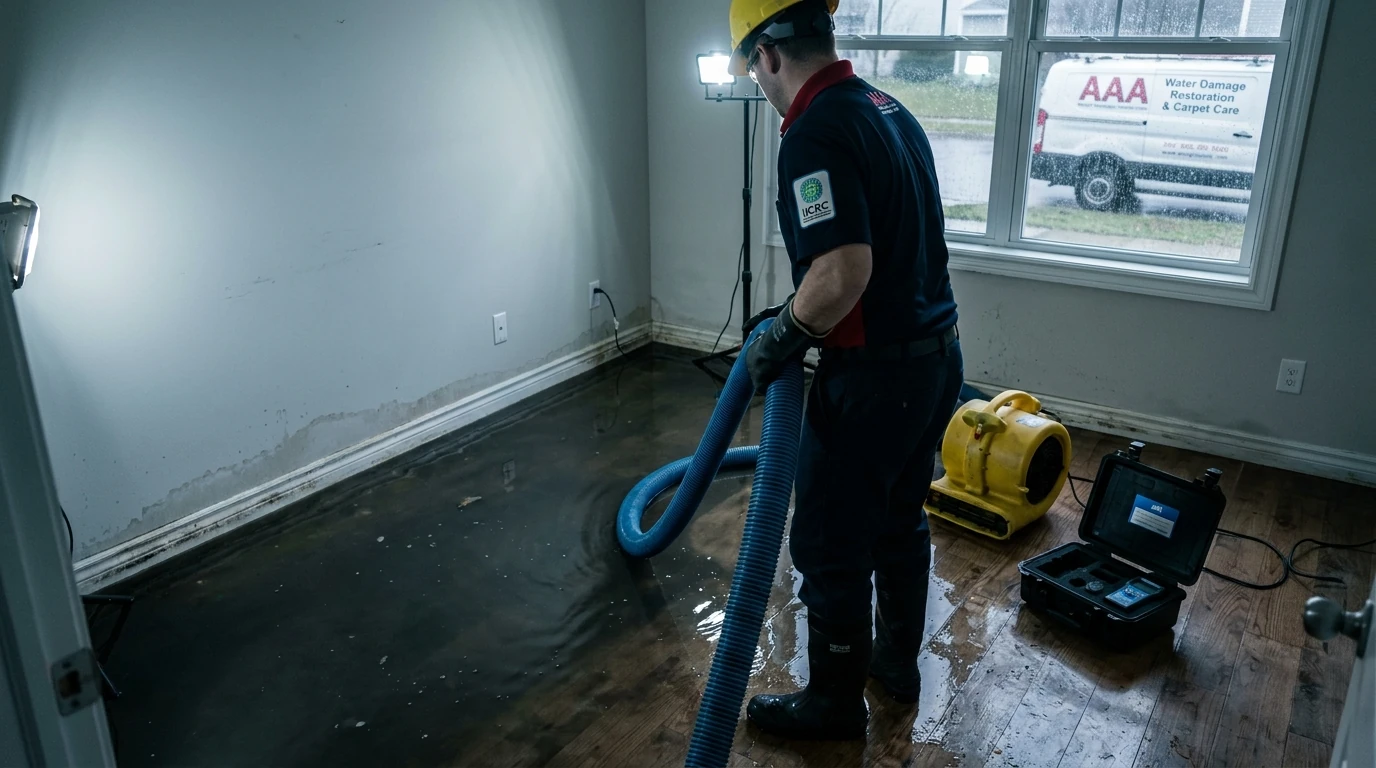
If you are handling a genuinely clean-water spill on hard surfaces, you still need basic protective gear: rubber gloves, waterproof boots, and eye protection. For anything with even a possibility of contamination, the minimum is N95 respirator, nitrile gloves, waterproof boots, and eye protection. The EPA’s flooding and indoor air quality guidance recommends full protective gear and proper disposal of contaminated materials.
For equipment, a standard household wet-vac is not enough for meaningful flood cleanup. You need a high-capacity extractor to pull water out of carpet and subfloor, and you need air movers and a low-grain refrigerant (LGR) dehumidifier to drive structural drying. Without those, you are just moving surface water around while moisture stays trapped in the materials underneath.
If you are a capable DIYer and your situation genuinely qualifies for self-cleanup, renting professional-grade drying equipment is the smarter path than buying box-store fans. AAA Water Damage offers flood equipment rental for homeowners who want to handle their own drying with the right tools.
Why carpet and padding almost always need to come out
Carpet padding is a sponge. It absorbs water faster than the carpet above it and releases moisture much more slowly. Even with professional air movers running, wet padding underneath intact carpet rarely dries fast enough to prevent mold growth.
In Hawaii’s tropical humidity, wet materials can show visible mold within 24 to 48 hours. That window is shorter than most homeowners expect, and it is shorter here than almost anywhere on the mainland. If your carpet got wet in a flood, the practical answer in most cases is extraction, then removal of the padding, then drying the subfloor before any reinstallation.
For flood water specifically, Category 3 contamination means the carpet and padding are not just wet, they are contaminated. Cleaning them in place is not sufficient. Restoration professionals extract, bag, and dispose of contaminated materials under specific protocols.
For more on why this matters, see our post on why sewage backup cleanup is not a DIY job, which covers the same contamination category in detail.
How long does flood cleanup actually take?
A proper structural dry-out after flood damage takes 3 to 5 days minimum with professional equipment running continuously, and often longer depending on the materials involved. Drywall, subfloor, and framing hold moisture long after the surface feels dry to the touch.
DIY cleanup with fans and a rented dehumidifier takes longer, sometimes twice as long, and without moisture meters you have no way to verify that materials have actually reached dry standard. Stopping too early is the most common DIY mistake, and it leads directly to mold growth inside walls and under floors.
For a full breakdown of timelines by damage type, see how long water damage restoration actually takes.
What happens if you skip professional remediation on flood damage?
Skipping professional remediation on Category 3 flood damage creates two problems: a health risk and an insurance problem.
The health risk is mold. Flood water deposits organic material into every surface it contacts. That material feeds mold colonies that can establish inside wall cavities and under flooring within 48 hours in Hawaii’s climate. By the time you see or smell mold, it has already been growing for days. See how to prevent mold after a flood for the specific steps that close that window.
The insurance problem is documentation. Most homeowners policies and flood insurance policies require prompt mitigation. If you attempt DIY cleanup and the damage worsens, or if mold appears later and the insurer can show mitigation was inadequate, your claim may be reduced or denied. Professional remediation companies document the moisture readings, the equipment deployed, and the drying progress, which is exactly what an adjuster needs to process the claim. See how to document flood damage for insurance for what that record should include.
What should you do right now?
If the water is still coming in, stop it first. Turn off the main water supply if it is a plumbing source. If it is storm-related, do what you can to limit entry (towels at thresholds, moving valuables up) and wait for it to stop.
Once the source is stopped:
- Photograph everything before you touch it. Every room, every waterline, every affected item.
- Move valuables and electronics out of the wet area.
- Do not run HVAC through a flooded space, it spreads contamination.
- If the water source is ambiguous or came from outside, do not enter without rubber boots and gloves.
- Call a restoration company to assess the damage before you start pulling up flooring or cutting drywall.
For flood water, the honest advice is to get a professional assessment before you commit to DIY. The assessment itself tells you the moisture readings, the contamination category, and the scope of what needs to happen. That information lets you make a real decision, not a guess.
AAA Water Damage Restoration & Carpet Care has served Oahu for over 25 years and responds 24/7. If you are looking at standing water right now, call (808) 349-3407 for an immediate assessment. For homeowners who confirm a clean-water loss and want to handle their own drying, ask about flood equipment rental to get professional-grade air movers and dehumidifiers on-site fast.
About AAA Water Damage Restoration & Carpet Care
AAA Water Damage Restoration & Carpet Care (AAA Flood Service LLC) has been serving Oahu homeowners and property managers for over 25 years. Operating 24/7, their crews handle flood damage restoration, sewage cleanup, mold remediation, mold inspection and testing, carpet cleaning, upholstery cleaning, and flood equipment rental across Honolulu, Hawaii Kai, Kailua, Kaneohe, and communities across the island. Call (808) 349-3407 any time.