
TL;DR: Document flood damage before you move or throw away anything. Photograph every affected room from four corners, capture close-ups of waterlines and damaged items, and build a written inventory with purchase dates and estimated values. If you have a National Flood Insurance Program (NFIP) policy, you have 60 days from the date of loss to submit a signed Proof of Loss form. Restoration crews document what they find and share that documentation with your adjuster, but the initial record is yours to create, and it starts the moment it is safe to re-enter.
Your Waikiki condo flooded overnight. Or a Kona Low pushed storm surge into your Kakaako ground-floor unit. You have called your insurance company, and now the claims rep is asking for documentation. What exactly does that mean, and what does an adjuster actually need to approve your claim? This guide walks you through every step, in the order you should do it.
Is it safe to start documenting?
Before you enter a flooded space, confirm the power is off to the affected area and the water source has stopped. Standing water and live electricity are a fatal combination. If you smell gas, leave and call the gas company before re-entering. Once the space is safe, you can begin.
In Honolulu’s high-rise buildings, particularly in Kakaako and Ala Moana, a unit above yours may still be leaking. Check the ceiling for active drips before you spend time in the space. If water is still moving, document what you can from the doorway and wait for it to stop.
What should you photograph first?
Photograph everything before mitigation begins. This is the single most important rule in flood damage documentation. Once a restoration crew extracts water, removes wet carpet, or tears out drywall, that evidence is gone. Your photos taken before work starts are what the adjuster uses to establish the scope of loss.
Shoot in this order:
- Wide establishing shots of each affected room from all four corners. These show the adjuster the full extent of the damage in context.
- The waterline or flood mark on walls, baseboards, and door frames. Measure it and photograph the tape measure in the frame.
- Damaged flooring close up: buckled hardwood, saturated carpet, cracked tile grout lines.
- Damaged contents in place, before you move them. Photograph furniture, appliances, electronics, and personal property where they sat during the flood.
- Structural damage: swollen doors, warped cabinetry, stained or sagging ceilings, cracked drywall.
- The source of water entry if visible: a failed window seal, a breached exterior door, storm drain overflow at the building perimeter.
- Serial numbers and model labels on appliances and electronics that were damaged.
Use your phone’s timestamp feature or a camera that embeds EXIF date data. Adjusters notice when photos lack timestamps.
How do you build the inventory list adjusters want?
A photo proves something was damaged. An inventory list proves what it was worth. Adjusters need both.
For each damaged item, record:
- Item description (be specific: “Samsung 65-inch QLED TV, model QN65Q80C”)
- Approximate purchase date
- Original purchase price (pull receipts from email if you have them)
- Estimated current replacement cost
- Condition before the loss
Here is a room-by-room table of the items adjusters most commonly need documented:
| Room | Items to inventory |
|---|---|
| Living room | Sofa, chairs, rugs, TV, electronics, shelving, artwork |
| Kitchen | Refrigerator, dishwasher, cabinetry, flooring, small appliances |
| Bedroom | Mattress, bed frame, dresser, clothing, electronics |
| Bathroom | Vanity, flooring, any stored personal property |
| Laundry area | Washer, dryer, water heater (if affected) |
| Storage / garage | Tools, sporting equipment, stored boxes, seasonal items |
| Structural elements | Drywall, insulation, flooring material, baseboards, doors |
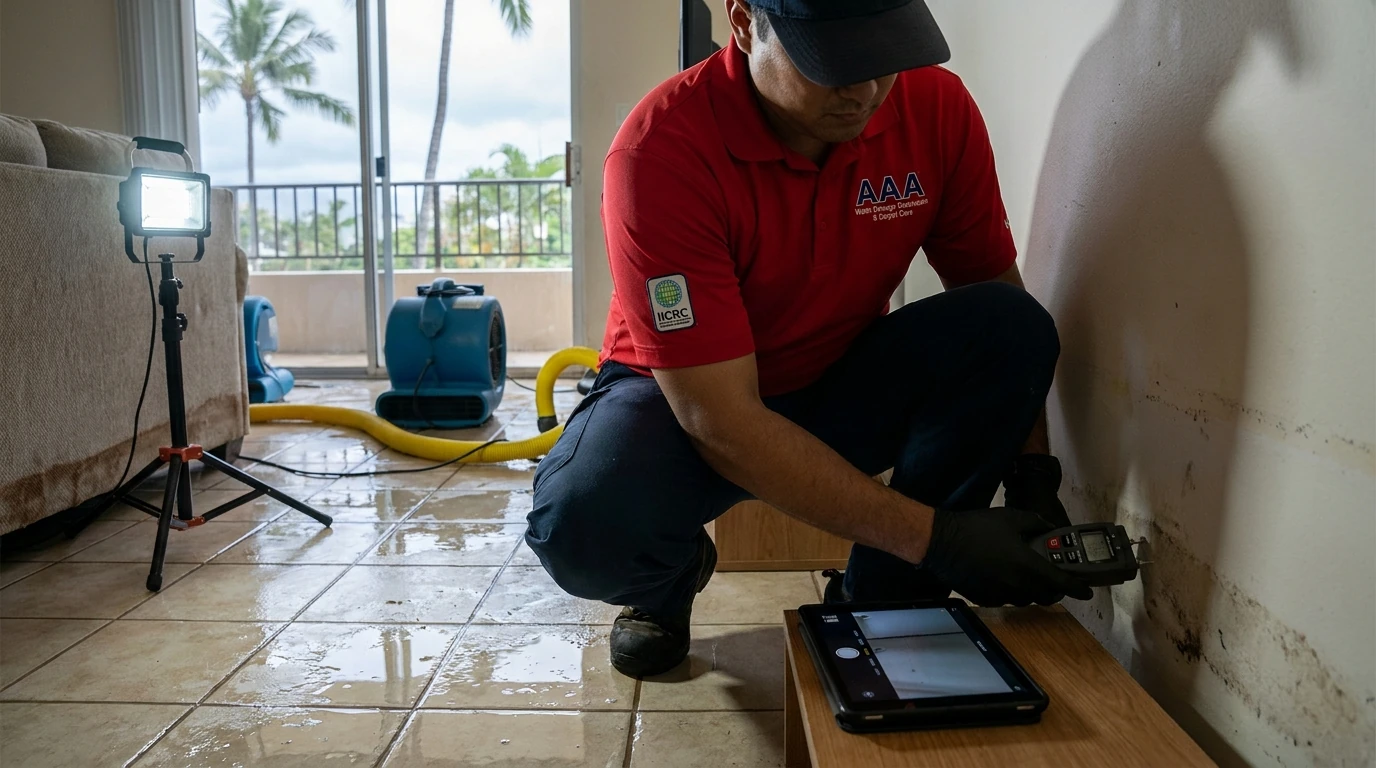
For structural elements, your restoration contractor will provide a written scope of work that itemizes materials and labor. That scope is part of your claim package. AAA Water Damage documents what the crew finds during assessment and shares that documentation with your adjuster, but your personal property inventory is separate and yours to compile.
What is the NFIP Proof of Loss deadline?
If your flood coverage comes through the National Flood Insurance Program (NFIP), you must submit a signed Proof of Loss within 60 days of the date of loss. Missing this deadline can result in your claim being denied regardless of how strong your documentation is. FloodSmart.gov outlines the claims process and what the Proof of Loss form requires.
The Proof of Loss is a sworn statement of the amount you are claiming. It must be signed and submitted before the deadline, even if your adjuster has not yet completed their inspection. You can submit an amended Proof of Loss later if the scope changes, but the initial filing must happen on time.
If your policy is a private flood policy rather than NFIP, the deadline may differ. Read your declarations page or call your agent to confirm.
For standard homeowners policies covering water damage from a burst pipe or appliance failure (not flood), the process is similar but the deadlines vary by insurer. See our guide on does homeowners insurance cover water damage for how those claims differ from flood claims.
Should you start cleanup before the adjuster arrives?
Yes, with conditions. You are not required to leave your home in a damaged state indefinitely. Insurance policies include a duty to mitigate, meaning you are expected to take reasonable steps to prevent additional damage. Leaving soaked carpet in place for a week while you wait for an adjuster is not reasonable, and an insurer can reduce your claim if preventable secondary damage (like mold) occurs.
The rule: document everything first, then mitigate.
In Honolulu’s tropical climate, this matters more than almost anywhere on the mainland. Soaked drywall and carpet can show visible mold growth within 24 to 48 hours year-round. Waiting too long is not just uncomfortable, it creates a secondary mold claim that complicates the original loss. See how to prevent mold after a flood in Hawaii’s humidity for the specific window you are working in.
What you can do before the adjuster arrives:
- Extract standing water
- Remove saturated carpet and pad (photograph it in place first, then photograph it removed and staged outside)
- Open windows for ventilation if weather permits
- Place air movers and dehumidifiers
What to hold off on:
- Tearing out drywall or structural materials (unless there is an active safety hazard)
- Disposing of any damaged personal property
- Painting or patching anything
If your adjuster cannot arrive within 48 hours, call and ask for written authorization to begin mitigation. Get that authorization in writing, email is fine.
Do you need a public adjuster?
A public adjuster is a licensed professional who represents you, not the insurance company, in the claims process. They are different from the insurance company’s adjuster, who represents the insurer.
You are not required to hire one. For straightforward losses with clear documentation, many homeowners handle the claim directly. For large or complex losses, a multi-unit condo building in Kakaako where the HOA’s policy, your unit policy, and a neighbor’s policy all overlap, a public adjuster can help untangle the coverage layers.
Restoration contractors like AAA Water Damage are not public adjusters and do not negotiate your claim. What they provide is thorough on-site documentation: moisture readings, scope of work, equipment logs, and photo records of conditions found. That documentation goes to your adjuster and supports your claim. The claim itself is between you and your insurer.
The Insurance Information Institute has a plain-English overview of the homeowners claims process at iii.org if you want to understand what to expect at each stage.
What to do right now
If you are reading this with water on the floor, here is the short version:
- Confirm the space is safe (power off, no active gas leak, no falling water from above).
- Photograph every room from four corners before touching anything.
- Photograph the waterline with a tape measure in frame.
- Photograph all damaged contents in place.
- Start your written inventory immediately, do not wait until cleanup is done.
- Call your insurance company to open the claim and get a claim number.
- If you have an NFIP policy, note the date of loss and count 60 days forward for your Proof of Loss deadline.
- Call a restoration crew to begin extraction and drying, after your documentation is complete.
For flood damage restoration or water damage restoration across Oahu, AAA Water Damage Restoration & Carpet Care responds 24/7. Call (808) 349-3407 to get a crew started and receive a written scope your adjuster can use.
About AAA Water Damage Restoration & Carpet Care
AAA Water Damage Restoration & Carpet Care is a locally owned Oahu company with over 25 years of experience serving Honolulu and surrounding communities. Their crews handle water damage restoration, flood damage restoration, burst pipe cleanup, sewage cleanup, mold remediation, mold inspection and testing, carpet cleaning, upholstery cleaning, commercial restoration, and flood equipment rental across the island. The team operates 24/7 and provides written documentation of all on-site findings to support homeowner insurance claims.