24/7 Emergency Sewage Cleanup and Sanitization in Waimanalo
24/7 emergency sewage cleanup and sanitization in Waimanalo, HI. Insurance billing accepted. Call (808) 349-3407.
Our technicians are dispatched from our Honolulu, HI headquarters and are typically on-site in Waimanalo within 60 minutes of your call.
Waimanalo sits at the windward base of the Ko’olau Range, where heavy rainfall, high water tables, and a mix of older residential lots with aging septic systems create conditions that make sewage backups more than an occasional inconvenience. When a sewer line backs up or a septic tank overflows here, the combination of tropical heat and humidity means bacterial growth accelerates fast, and the window for safe, effective cleanup is short. AAA Water Damage Restoration & Carpet Care responds 24/7 to sewage emergencies throughout Waimanalo and the surrounding windward coast.
Why Waimanalo Properties See Sewage Backup Issues
Waimanalo’s residential areas developed largely through the mid-20th century, and many lots still rely on individual cesspools or older septic systems rather than a municipal sewer connection. Cesspools in particular are prone to overflow during extended rain events, when saturated soil loses its ability to absorb effluent. The windward side of O’ahu receives significantly more rainfall than Honolulu, and Waimanalo’s low-lying coastal terrain means that stormwater and groundwater can intrude into drain fields and force waste back toward the structure. Homes closer to the beach face an additional layer of complexity: high water tables reduce the effective depth of any underground system, and saltwater intrusion can corrode older cast-iron or clay sewer laterals from the outside in, causing cracks that allow both leakage and blockage.
Even properties connected to the county sewer system are not immune. Tree root intrusion into aging lateral lines is common in neighborhoods with mature landscaping, and a single blocked lateral can send raw sewage backing up through floor drains, toilets, and tub drains with very little warning.
Our Sewage Cleanup and Sanitization Process in Waimanalo
Raw sewage is classified as Category 3 water, the most contaminated type recognized in the industry. That classification drives every decision in how we approach a job here.
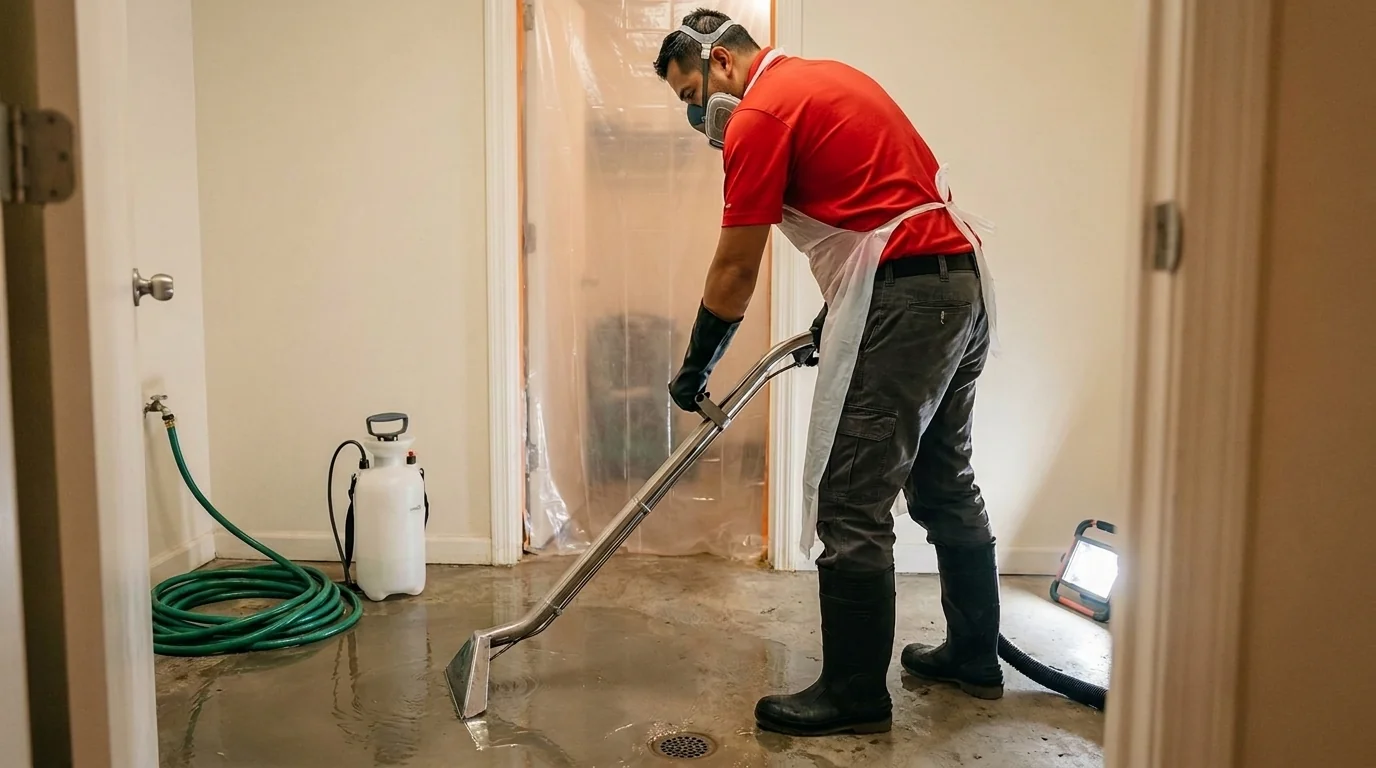
The first step is containment: we establish a work perimeter to prevent cross-contamination from spreading into unaffected rooms. All standing sewage is extracted using truck-mounted or portable units capable of handling solids, not just water. Affected porous materials, including carpet, padding, drywall, and insulation that absorbed sewage, are removed and bagged for proper disposal. Because Waimanalo’s warm, humid climate accelerates microbial activity, we do not leave surfaces to air-dry between steps. After extraction, all hard surfaces are cleaned, disinfected with EPA-registered antimicrobials, and treated to address odor-causing bacteria rather than masking the smell.
Drying equipment, including dehumidifiers calibrated for high-ambient-humidity environments, runs until moisture readings confirm the structure has returned to safe levels. In a coastal windward climate, ambient relative humidity is already elevated, so equipment must work harder and run longer than it would in a drier region. We monitor daily and adjust.
Reaching Waimanalo from Honolulu
Our team dispatches from Honolulu and reaches Waimanalo via the Pali Highway or Kalanianaole Highway depending on time of day and traffic conditions. Both routes have their own patterns: the Pali corridor can be slowed by rain-related visibility issues in the Ko’olau tunnels, while Kalanianaole through Hawai’i Kai moves well outside of peak hours. Because we operate around the clock, we route based on current conditions at the time of your call. If you are dealing with an active overflow, call (808) 349-3407 immediately so we can dispatch while you take steps to limit contact with the affected area.
Local Note
One thing that matters specifically in Waimanalo: many residential parcels here were established under older cesspool permits that predate current State of Hawai’i Department of Health requirements. If a cesspool overflow is the source of your backup, the cleanup documentation we provide can be relevant to any compliance conversation you have with the county or your insurer, since the state has been phasing out cesspools under a long-term program. We are not a regulatory authority and do not provide legal or compliance advice, but thorough written documentation of the affected area, materials removed, and sanitization performed is something we include as a standard part of every job, and it tends to matter when property owners are navigating next steps after a cesspool-related event.
Insurance and Documentation for Waimanalo Sewage Claims
Sewage backup coverage is typically a separate endorsement on a homeowner’s policy, not a standard inclusion. Before assuming your loss is covered, check your policy for a sewage or sewer backup rider. If you have that coverage, we document the damage thoroughly: photographs, moisture readings, material inventories, and a written scope of work. We communicate directly with adjusters to reduce the back-and-forth you would otherwise have to manage while also dealing with an uninhabitable area of your home. If coverage is limited or absent, we can walk through the scope and cost before work begins so there are no surprises.
If you are dealing with sewage backup in Waimanalo right now, do not wait. Bacterial contamination spreads to adjacent materials within hours in this climate, and the cost of cleanup grows with every hour the material stays wet. Call (808) 349-3407 any time, day or night.
Sewage Cleanup and Sanitization in Waimanalo: Service Coverage
Frequently Asked Questions
How fast can you arrive for sewage cleanup and sanitization in Waimanalo?
How does Waimanalo's high rainfall affect how quickly sewage damage spreads in a home?
My Waimanalo home is on a cesspool, not a sewer line. Does that change how the cleanup works?
Are older homes in Waimanalo more likely to have sewer line problems that cause backups?
What does the sanitization step actually involve, and why can't I just clean it myself with bleach?
Does sewage backup coverage typically apply to cesspool overflows for Waimanalo homeowners?
Will my homeowners insurance cover sewage cleanup and sanitization in Waimanalo?
Sewage Cleanup and Sanitization response in Waimanalo
Most Waimanalo calls see a technician on-site within 60 minutes from our Honolulu headquarters.
Nearby & Related
- 24/7 Emergency Sewage Cleanup and Sanitization in Honolulu
- Restoration Services in Waimanalo
- Mold Remediation in Waimanalo
- 24/7 Emergency Water Damage Restoration in Waimanalo
- 24/7 Emergency Sewage Cleanup and Sanitization in Aiea
- 24/7 Emergency Sewage Cleanup and Sanitization in Aina Haina
- Contact AAA Water Damage Restoration & Carpet Care