
Mold Inspection and Testing in Waianae
24/7 mold inspection and testing in Waianae, HI. Insurance billing accepted. Call (808) 349-3407.
Our technicians are dispatched from our Honolulu, HI headquarters and are typically on-site in Waianae within 60 minutes of your call.
Waianae sits on the dry leeward side of Oahu, but dry does not mean mold-free. The trade winds that keep the windward coast humid also push warm, moisture-laden air through coastal gaps, and homes here cycle between salt-heavy ocean breezes and the occasional heavy rain that rolls off the Waianae Range. That combination creates hidden moisture conditions that standard visual inspections miss entirely. A professional mold inspection and testing assessment identifies what is actually growing in your walls, crawlspaces, and HVAC ducts before it becomes a health concern or a deal-breaker on a sale.
Why Waianae Properties See Elevated Mold Risk
The leeward coast has a reputation for sunshine, but the building stock tells a different story. Many homes in the Waianae area were built in the 1970s and 1980s during rapid residential expansion, using construction methods that did not account for the microclimate variations between the coastline and the inland valleys below the ridge. Concrete block construction, common throughout this part of Oahu, can wick ground moisture upward through the slab and into wall cavities without showing any visible surface staining. Roof overhangs are often shorter than on windward homes, meaning rain events push water directly against siding and window frames.
When a roof leak, plumbing drip, or flooding event occurs, mold can begin colonizing porous materials within 24 to 48 hours. In a home that sits close to the coast, residual salt on surfaces can actually trap moisture against building materials longer than it would in an inland environment, giving mold spores more time to take hold even after the visible water is gone.
Our Mold Inspection and Testing Process in Waianae
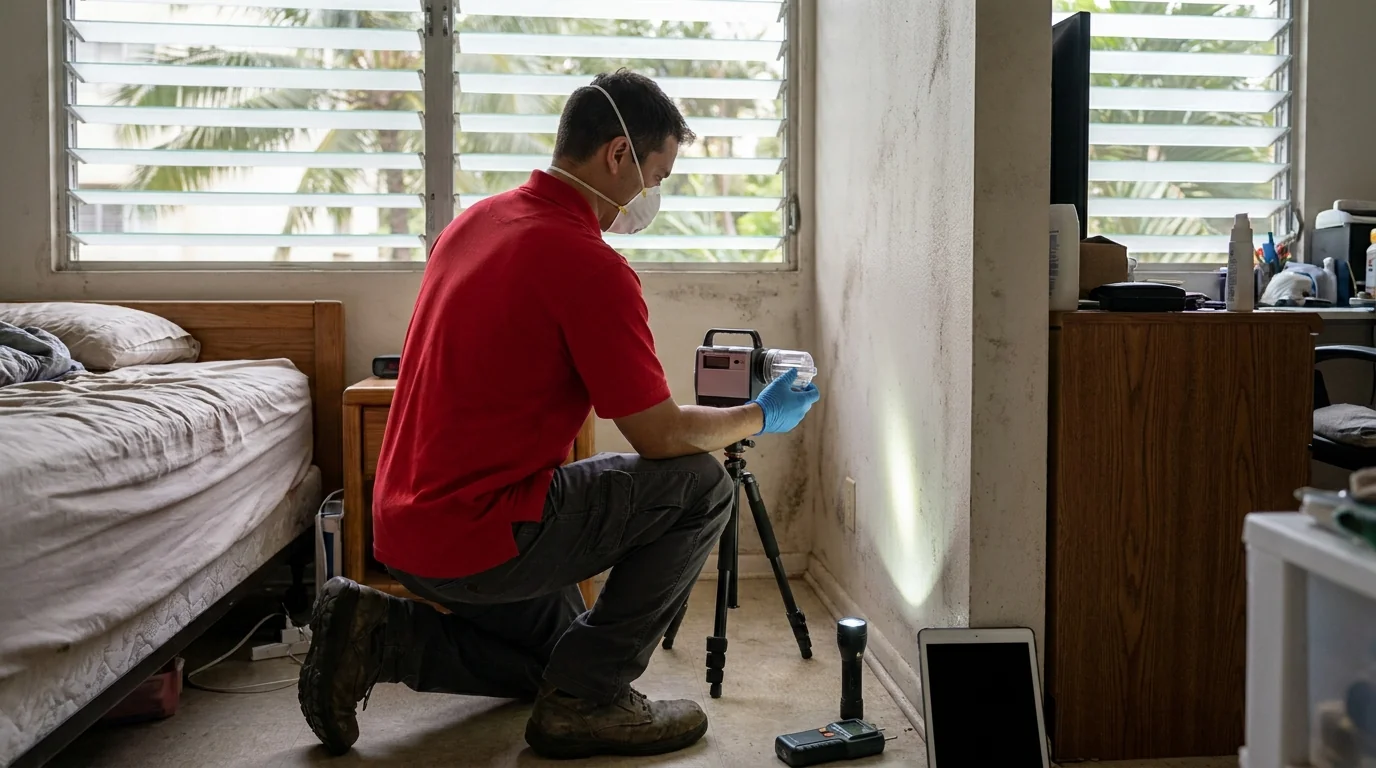
A thorough mold assessment here goes beyond a flashlight walkthrough. The process starts with a moisture mapping survey using calibrated meters to read moisture content in walls, ceilings, and subfloor materials without cutting into surfaces. Elevated readings direct where air and surface samples are collected.
Air sampling draws a measured volume of indoor air through a spore trap cassette, which is then sent to an accredited third-party laboratory. The lab report identifies the species present and compares indoor spore counts to an outdoor baseline sample taken at the same time. That comparison matters in Waianae because outdoor mold counts here can be naturally higher than in cooler, drier climates, so a raw indoor number without context can be misleading. Surface swab or tape-lift samples are collected when visible growth is present, confirming species and concentration at the source.
The written report you receive names the species found, their concentrations, and the areas of concern, giving you and your contractor a clear scope before any remediation work begins.
Reaching Waianae from Honolulu
The team dispatches from Honolulu and reaches the Waianae coast via H-1 West to Farrington Highway. Because the Waianae area is a longer drive from central Honolulu than most of the island, scheduling matters. AAA Water Damage Restoration & Carpet Care operates around the clock, so if you discover a musty smell or visible growth after a weekend storm, you can call (808) 349-3407 at any hour to get an inspection appointment on the calendar without waiting through a business-hours queue. Early scheduling also means the lab turnaround on your samples starts sooner, which is important when a real estate transaction or a tenant situation is creating time pressure.
Local Note: Leeward Humidity Pockets and Concrete Block Homes
One thing that becomes clear working on the leeward coast is that concrete block homes here behave differently from wood-frame construction on the windward side. Block walls do not show moisture intrusion the way drywall does. A wall can read elevated on a moisture meter while looking and feeling completely dry to the touch, because the moisture is moving through the block matrix itself rather than saturating a paper-faced surface. Inspectors unfamiliar with this construction type sometimes clear a room that is actually harboring mold behind or within the block. Sampling both air quality and surface conditions in these homes is not optional, it is the only way to get an accurate picture of what is actually present.
What to Do Before and After Testing
Before the inspection, avoid running fans or HVAC systems for at least two hours, and keep windows closed. Mixing indoor and outdoor air artificially lowers spore counts and can produce a false-negative result. After the lab report comes back, the findings guide next steps: if counts are within normal range, you have documentation for peace of mind or a real estate disclosure. If elevated concentrations are confirmed, the report becomes the remediation scope that a contractor works from, and a follow-up clearance test after remediation confirms the work is complete. That clearance test is a separate sampling event, not a visual sign-off.
Mold Inspection and Testing in Waianae: Service Coverage
Frequently Asked Questions
How fast can you arrive for mold inspection and testing in Waianae?
Does the leeward climate in Waianae make mold testing results harder to interpret?
Are concrete block homes common in Waianae, and does that affect how mold inspection is done?
How quickly can AAA Water Damage Restoration & Carpet Care reach Waianae for a mold inspection?
What mold species are most commonly found in Waianae homes?
How long does it take to get mold testing results in Waianae, and what happens after?
Will my homeowners insurance cover mold inspection and testing in Waianae?
Mold Inspection and Testing response in Waianae
Most Waianae calls see a technician on-site within 60 minutes from our Honolulu headquarters.