
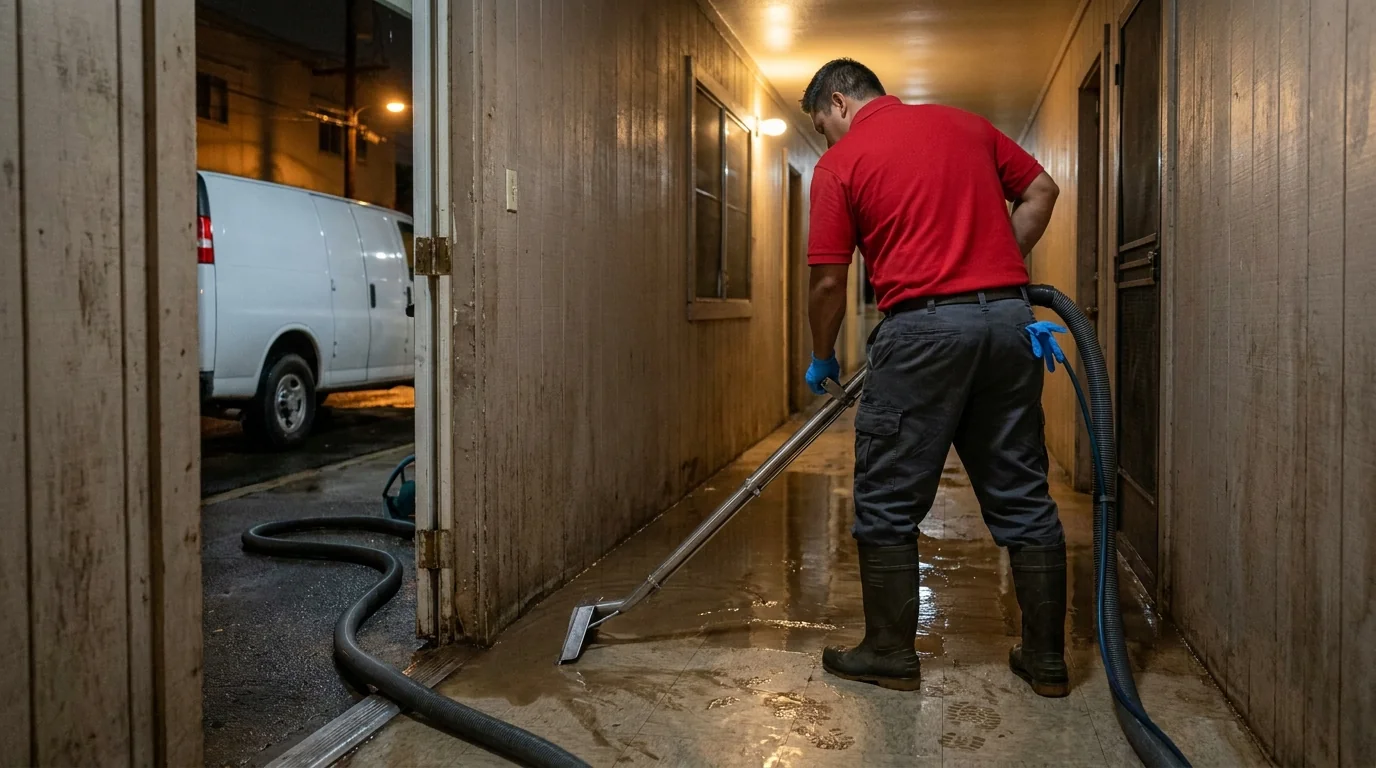
24/7 Emergency Flood Damage Restoration in Waiahole-Waikane
24/7 emergency flood damage restoration in Waiahole-Waikane, HI. Insurance billing accepted. Call (808) 349-3407.
Our technicians are dispatched from our Honolulu, HI headquarters and are typically on-site in Waiahole-Waikane within 60 minutes of your call.
The Ko’olau Mountains rise almost directly above Waiahole and Waikane, and when a tropical storm or a prolonged Kona low parks over the windward side of O’ahu, those steep valley walls funnel rainfall straight down into the flatlands below. Flood water here moves fast, carries red laterite soil, and can push through a home’s lower level before a homeowner has time to move furniture. If your property is dealing with that kind of loss right now, AAA Water Damage Restoration & Carpet Care responds around the clock and can be reached at (808) 349-3407.
Why Waiahole-Waikane Properties See Flood Damage Differently Than the Rest of O’ahu
Windward O’ahu receives some of the highest annual rainfall totals in the state, and the Waiahole-Waikane corridor sits at the base of valley drainages that have very little room to absorb runoff before it reaches residential land. The soil profile here is dense, iron-rich clay over volcanic rock, which means water saturates quickly and has nowhere to percolate. When the ground is already wet from a week of trade-wind showers and a heavier system arrives, surface flooding can appear in minutes rather than hours.
Many homes in this stretch of Kamehameha Highway were built as rural plantation-era or post-war structures, often set on pier-and-beam or low concrete slab foundations. That construction style keeps the living space close to grade, which is practical for the climate but leaves very little buffer when stream levels rise. Crawl spaces and under-floor voids collect standing water that is invisible from inside the house, and that hidden moisture is where the real structural and air-quality damage begins.
Waiahole Stream and Waikane Stream both drain directly through the community. During significant rain events, culverts along the highway corridor can back up, and water that would otherwise sheet off into the ocean instead pools against foundations and enters through garage slabs, utility penetrations, and door thresholds.
Our Flood Damage Restoration Process in Waiahole-Waikane
Every flood job on the windward side starts the same way: a thorough moisture survey before any equipment is placed. We use thermal imaging and calibrated moisture meters to map exactly where water has traveled, including inside wall cavities and beneath flooring, because flood water in a clay-soil environment wicks upward through concrete slabs in ways that are not obvious to the eye.
Once the scope is mapped, extraction comes first. Standing water is removed with truck-mounted and portable extraction units suited to the access constraints common on rural Kamehameha Highway properties, where long driveways and limited turnaround space are the norm. After bulk water is out, we place industrial desiccant or refrigerant dehumidifiers and high-velocity air movers calibrated to the ambient humidity on the windward coast, which runs higher than Honolulu even on clear days. Drying targets are set to the conditions of this specific climate, not to a mainland standard.
Materials that cannot be dried in place, including saturated insulation, compromised flooring underlayment, and flood-affected drywall below the waterline, are removed and documented before disposal. Documentation matters here because it feeds directly into your insurance claim file.
Reaching Waiahole-Waikane from Honolulu
Our team dispatches from Honolulu and reaches the windward side via the H-3 freeway through the Ko’olau tunnel, which is the most reliable route regardless of time of day. The Likelike Highway (Route 63) is an alternative when H-3 is congested, though it adds time during morning and afternoon peak hours. Because we operate 24/7, late-night and early-morning calls often see faster travel times than midday dispatches on the same route.
Once on the windward side, Kamehameha Highway through Waiahole and Waikane is a two-lane road with limited shoulder. We size our equipment loads accordingly and call ahead when a large truck is needed, coordinating access so we are not blocking the highway while unloading.
Local Note
One thing that surprises homeowners in this valley who have not dealt with flood damage before: the interior of a home can smell and feel dry within a day or two of a flood event, because windward trade winds move through open windows and create a false sense of recovery. Beneath a concrete slab or inside a pier-and-beam floor cavity, moisture readings can stay dangerously elevated for weeks under those same conditions. We always verify with meters before calling a structure dry, because in Waiahole-Waikane’s climate, surface dryness and structural dryness are two very different things.
If your home on the windward coast took on water, call (808) 349-3407 any hour. AAA Water Damage Restoration & Carpet Care will assess the actual moisture condition of your structure, not just what is visible, and build a drying plan that accounts for the specific climate and construction realities of Waiahole-Waikane.
Flood Damage Restoration in Waiahole-Waikane: Service Coverage
Frequently Asked Questions
How fast can you arrive for flood damage restoration in Waiahole-Waikane?
How long does flood drying typically take for a home in the Waiahole-Waikane valley given the windward humidity?
Does the clay soil common in the Waiahole-Waikane area affect how flood water enters and dries in a home?
Can you access properties along Kamehameha Highway in Waiahole and Waikane with large restoration equipment?
What flood-related documents should a Waiahole-Waikane homeowner gather before the restoration crew arrives?
Are pier-and-beam homes common in Waiahole-Waikane, and does that foundation type complicate flood restoration?
Will my homeowners insurance cover flood damage restoration in Waiahole-Waikane?
Flood Damage Restoration response in Waiahole-Waikane
Most Waiahole-Waikane calls see a technician on-site within 60 minutes from our Honolulu headquarters.
Nearby & Related
- 24/7 Emergency Flood Damage Restoration in Honolulu
- Restoration Services in Waiahole-Waikane
- Mold Remediation in Waiahole-Waikane
- 24/7 Emergency Water Damage Restoration in Waiahole-Waikane
- 24/7 Emergency Flood Damage Restoration in Aiea
- 24/7 Emergency Flood Damage Restoration in Aina Haina
- Contact AAA Water Damage Restoration & Carpet Care