
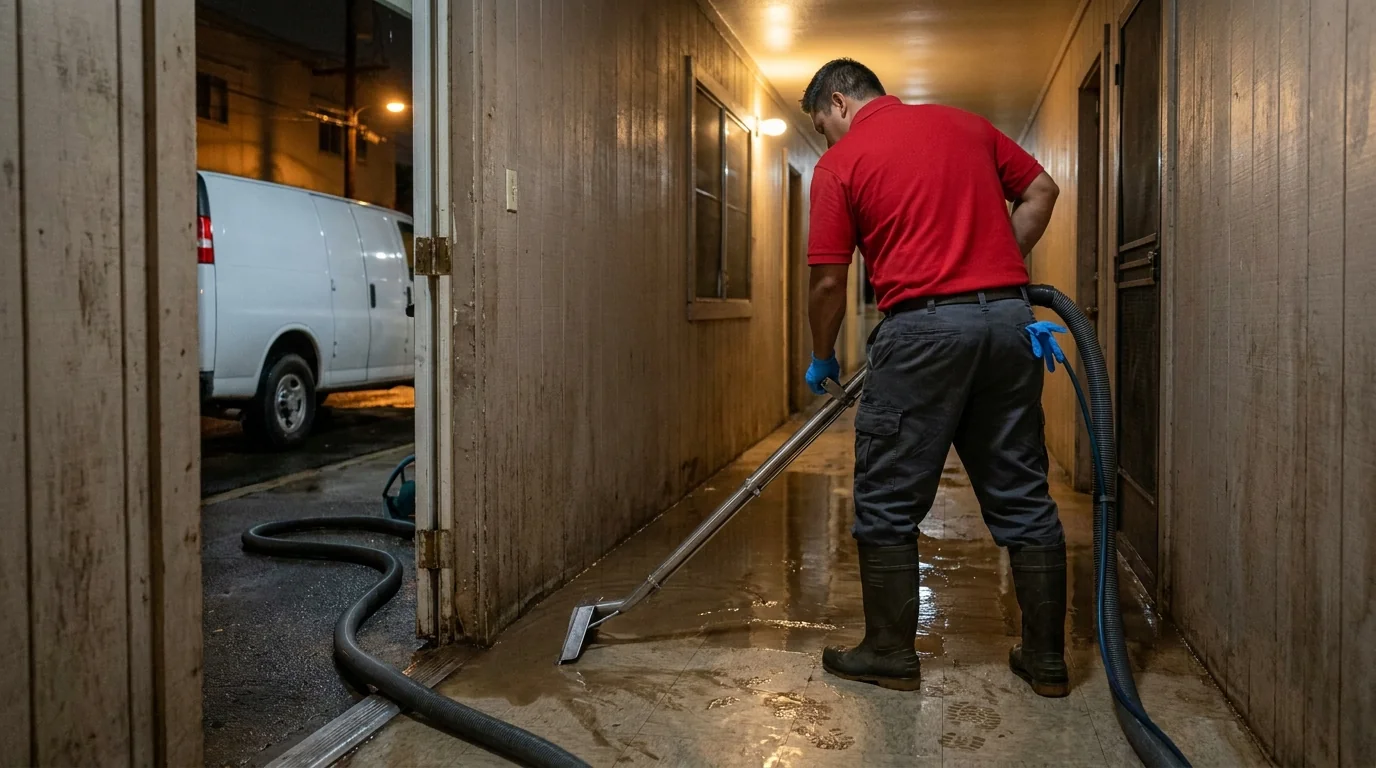
24/7 Emergency Flood Damage Restoration in Kalaeloa
24/7 emergency flood damage restoration in Kalaeloa, HI. Insurance billing accepted. Call (808) 349-3407.
Our technicians are dispatched from our Honolulu, HI headquarters and are typically on-site in Kalaeloa within 60 minutes of your call.
Kalaeloa sits on the western edge of Oahu in a stretch of coastline where the ocean is never far from your foundation. The former military installation and its surrounding residential areas occupy low-lying ground that drains slowly after heavy rain, and when a storm stalls over the Waianae Range and drops several inches in a short window, floodwater can move through homes here faster than most people expect. If your property has taken on water, the clock starts the moment the rain stops, and AAA Water Damage Restoration & Carpet Care is available around the clock at (808) 349-3407.
Why Kalaeloa Properties Are Particularly Vulnerable to Flood Damage
The geography of this part of Oahu works against homeowners during heavy rain events. Kalaeloa occupies a coastal plain with a high water table, meaning the ground has limited capacity to absorb runoff before it backs up into structures. Soils in this area tend toward compacted clay and coral fill, common in former military-developed land, which sheds water rather than absorbing it. Drainage infrastructure in some sections dates to the original base construction and was not designed with residential flood volumes in mind.
Oahu’s wet season, which runs roughly from November through March, brings kona storms that can deposit rainfall totals in hours that would normally take weeks. Unlike windward-side storms that residents can often track coming in, kona low systems can intensify quickly and stall, giving homeowners very little lead time. When that water finds its way inside, it carries sediment, debris, and in coastal-adjacent areas like this, the potential for salt intrusion into building materials.
What Flood Damage Restoration Looks Like in Kalaeloa
Flood cleanup here is not the same job it would be in a drier inland market. Salt-laden floodwater accelerates corrosion in metal fasteners, electrical boxes, and HVAC components. It also leaves a residue in porous materials like concrete block and stucco that standard drying alone will not address. The restoration process needs to account for that.
When we arrive, the first priority is extracting standing water using truck-mounted and portable extraction units sized for the volume present. Once the visible water is removed, the real work begins: moisture mapping with thermal imaging and calibrated meters to find water that has migrated behind walls, under tile, and into subfloor assemblies. In Kalaeloa’s housing stock, which includes both post-military-era concrete block construction and newer wood-frame builds, those two material types behave very differently under saturation. Concrete block can hold moisture for an extended period even when the surface feels dry, and drying plans have to reflect that.
Structural drying uses a combination of industrial air movers and refrigerant dehumidifiers positioned to create directed airflow through affected cavities. Daily moisture readings track progress and determine when materials have returned to acceptable levels before any reconstruction begins.
Reaching Kalaeloa from Honolulu
Our team dispatches from Honolulu and routes to Kalaeloa via H-1 West to the Fort Weaver Road corridor, which provides direct access to the area. Because we operate 24/7, a call at 2 a.m. after a late-night storm gets the same response as a midday call. We do not have a response-time guarantee in minutes to state here, but we move on flood calls as a priority because water migration into building materials accelerates with every hour it sits.
Local Note
One thing that comes up specifically in Kalaeloa’s older concrete block structures: the exterior walls were often built without a true vapor barrier between the block and interior finishes. When floodwater saturates the block, moisture wicks inward and can appear at the interior surface days after the initial event, long after a homeowner might assume the problem has resolved. If you see efflorescence, soft drywall, or a musty smell several days post-flood, that is not a new problem. It is the same water moving slowly through the wall assembly. Catching it with moisture meters before mold colonization begins is the reason we map every affected surface, not just the obviously wet ones.
Insurance Documentation for Kalaeloa Flood Losses
Flood losses on Oahu are typically handled through a combination of homeowners carriers and, for properties in mapped flood zones, the National Flood Insurance Program. Kalaeloa’s proximity to the coast means some properties here carry NFIP policies, which have specific documentation requirements that differ from standard homeowners claims. We photograph affected materials, document moisture readings at each measurement point, and produce a scope of loss that is formatted to support the claim process regardless of which carrier is involved. We work directly with adjusters and can communicate findings in the format they need to move the claim forward.
If your home or property in Kalaeloa has taken on floodwater, call (808) 349-3407 now. The sooner extraction and drying begin, the more of the structure can be saved and the shorter the overall restoration timeline.
Flood Damage Restoration in Kalaeloa: Service Coverage
Frequently Asked Questions
How fast can you arrive for flood damage restoration in Kalaeloa?
How does Kalaeloa's high water table affect the flood restoration process?
Does the salt content in Kalaeloa floodwater change what restoration work is needed?
Kalaeloa has a mix of older concrete block homes and newer wood-frame construction. Does that affect the timeline for flood cleanup?
If my Kalaeloa property is covered under an NFIP flood policy, can you work with that claim process?
How long does flood damage restoration typically take for a single-family home in Kalaeloa?
Will my homeowners insurance cover flood damage restoration in Kalaeloa?
Flood Damage Restoration response in Kalaeloa
Most Kalaeloa calls see a technician on-site within 60 minutes from our Honolulu headquarters.
Nearby & Related
- 24/7 Emergency Flood Damage Restoration in Honolulu
- Restoration Services in Kalaeloa
- Mold Remediation in Kalaeloa
- 24/7 Emergency Water Damage Restoration in Kalaeloa
- 24/7 Emergency Flood Damage Restoration in Aiea
- 24/7 Emergency Flood Damage Restoration in Aina Haina
- Contact AAA Water Damage Restoration & Carpet Care