
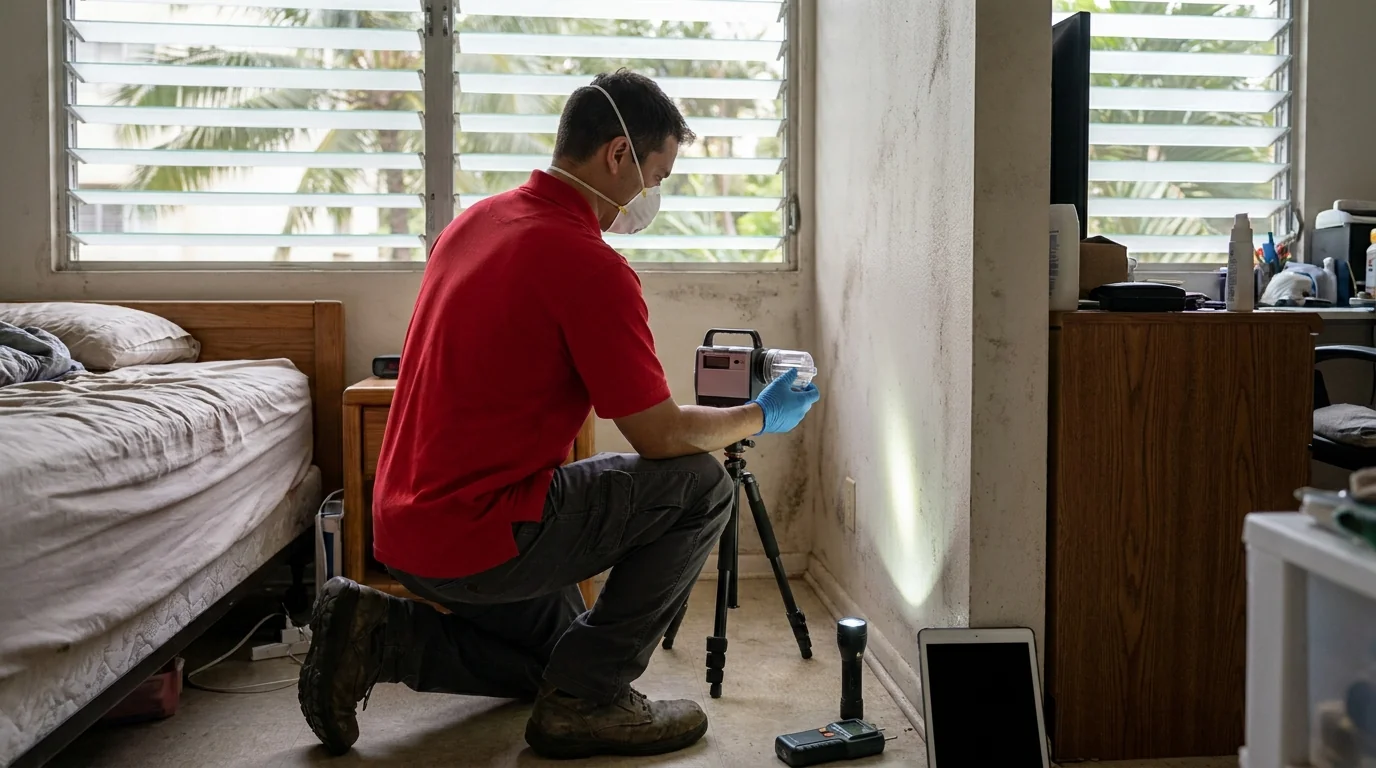
Mold Inspection and Testing in East Honolulu
24/7 mold inspection and testing in East Honolulu, HI. Insurance billing accepted. Call (808) 349-3407.
Our technicians are dispatched from our Honolulu, HI headquarters and are typically on-site in East Honolulu within 60 minutes of your call.
East Honolulu’s combination of ocean-facing exposure, year-round humidity, and the way trade winds funnel moisture through valleys toward neighborhoods like Hawaii Kai and Aina Hana creates conditions where mold doesn’t just appear after a flood, it colonizes quietly behind baseboards, inside wall cavities, and beneath flooring long before anyone notices a smell. A professional mold inspection and testing assessment is often the only way to know what’s actually growing and where.
Why East Honolulu Properties See Elevated Mold Risk
Hawaii’s climate is genuinely different from anywhere else in the country, and East Honolulu sits at a particular intersection of factors that accelerate mold growth. Relative humidity in this corridor regularly holds above 70 percent, which is the threshold at which common mold species begin colonizing porous materials within 24 to 48 hours of a moisture event. Homes in the area range from mid-century concrete block construction to newer wood-frame builds, and each presents its own challenge: older concrete block absorbs moisture slowly and releases it even more slowly, meaning a slow roof leak or a plumbing drip inside a wall can saturate the structure for months before surface staining appears. Wood-frame homes built on sloped lots, common throughout the hillside streets above Kalanianaole Highway, face a different issue, crawl spaces and sub-floor areas that trap ground moisture rising from the soil below.
The salt air that makes East Honolulu so livable also degrades caulking, window seals, and roof flashing faster than in continental climates, creating entry points for water intrusion that homeowners often attribute to a single storm rather than years of slow infiltration.
Our Mold Inspection and Testing Process in East Honolulu
A credible mold assessment starts before any sample is collected. The inspection begins with a visual walkthrough of the property, including areas that are easy to overlook: the interior of kitchen and bathroom exhaust fans, the space above drop ceilings, the perimeter of sliding glass doors, and any area where an air conditioning unit drains or condenses. East Honolulu homes frequently run their AC systems year-round, and improperly maintained drain lines are a consistent source of hidden moisture.
After the visual assessment, moisture readings are taken using calibrated meters at suspect surfaces. Elevated moisture behind a surface that looks visually dry is one of the clearest indicators that mold may be present without being visible. Air sampling and surface swab samples are then collected and sent to an accredited third-party laboratory. The lab results identify the species present and the spore concentration, which informs both the remediation scope and the indoor air quality picture for the occupants. You receive a written report with findings, sample results, and a clear explanation of what the numbers mean.
Equipment and Methods We Use for Mold Inspection
Because East Honolulu properties often have finished walls over concrete block or older plaster substrates, standard pin-type moisture meters don’t always give a complete picture. We use non-invasive radio-frequency moisture meters that read through finished surfaces without requiring penetration, which matters when you’re trying to assess a tiled bathroom wall or a painted concrete wall without causing unnecessary damage. Thermal imaging can also reveal temperature differentials that indicate moisture migration behind walls, particularly useful in homes where the interior finishes make direct access difficult. Air sampling uses calibrated pumps and spore trap cassettes that capture both viable and non-viable particles, giving the lab enough material to produce a reliable count.
Local Note
One pattern that comes up repeatedly in East Honolulu inspections involves homes with louvered jalousie windows, which were standard in residential construction here through the 1970s and are still common in older Hawaii Kai properties. Jalousie windows don’t seal tightly by design, and the gap between glass slats allows humid outside air to flow directly into wall cavities around the window frame. Over time, the framing and any insulation or vapor barrier material in that zone stays perpetually damp, even without a visible leak. Homeowners often repaint or recaulk the exterior without addressing the interior framing, so the mold problem persists. A thorough inspection accounts for this construction detail specifically.
If you’re noticing musty odors, allergy-like symptoms that improve when you leave the property, or visible discoloration on walls or ceilings anywhere in East Honolulu, the right next step is a documented inspection rather than a guess. Call AAA Water Damage Restoration & Carpet Care at (808) 349-3407 to schedule mold inspection and testing at your East Honolulu property. We’re available around the clock.
Mold Inspection and Testing in East Honolulu: Service Coverage
Frequently Asked Questions
How fast can you arrive for mold inspection and testing in East Honolulu?
Does East Honolulu's year-round humidity mean mold can grow even without a visible water leak?
Are older Hawaii Kai homes more likely to have hidden mold than newer construction?
What does a mold inspection report actually include, and will it satisfy an East Honolulu property disclosure requirement?
How does salt air in East Honolulu affect where mold tends to appear in a home?
How long does a mold inspection and testing visit take, and when will I have the lab results?
Will my homeowners insurance cover mold inspection and testing in East Honolulu?
Mold Inspection and Testing response in East Honolulu
Most East Honolulu calls see a technician on-site within 60 minutes from our Honolulu headquarters.