
TL;DR: Mold remediation typically costs anywhere from $500 for a small, contained spot on a single wall to $15,000 or more for a whole-house job with HVAC involvement. The number depends on how much square footage is affected, how complex the containment has to be, and how much material has to come out. On Oahu, remediation jobs often run larger than a mainland comparison quote suggests, because the humidity here means a water loss that wasn’t fully dried shows up as mold spread through multiple rooms, not one wall.
If you’ve got a water stain that’s started growing something green or black, or a musty smell that won’t go away no matter how many windows you open, you’re probably trying to figure out what this is going to cost before you even call anyone. Fair. The honest answer is that nobody can give you a real number without seeing the space, but the factors that move that number are predictable, and knowing them before a crew walks in means you’ll know whether a quote actually makes sense.
How much does mold remediation cost?
Most mold remediation jobs run somewhere between $500 and $8,000, with small single-wall jobs at the low end and widespread growth across multiple rooms at the high end. Whole-house remediation after a major, undetected water loss can push past $15,000.
Those numbers are typical industry ranges, not a price list. The actual cost on any given job depends on the square footage affected, how many rooms are involved, whether the HVAC system needs decontamination, and what materials have to be removed versus cleaned in place. A reputable company inspects first and gives you a written scope before any work starts, not a number over the phone.
Here’s roughly how that typically breaks down by scope:
| Scope of the job | Typical cost range |
|---|---|
| Small, contained area (under 10 sq ft, one wall) | $500 - $1,500 |
| Moderate growth (10-30 sq ft, single room) | $1,500 - $4,000 |
| Widespread single-room growth with HVAC involvement | $4,000 - $8,000 |
| Condo unit (shared wall cavities, high-rise HVAC) | $3,000 - $10,000 |
| Whole-house, multi-room after an undetected water loss | $8,000 - $15,000+ |
These ranges reflect what mold remediation typically costs across similar jobs, not a quote or a guarantee. Every property is different, and the only way to know your actual number is a physical inspection.
What actually drives mold remediation pricing per square foot?
Square footage affected is the single biggest driver, but it’s not the only one. Containment complexity, the type of material involved, and whether the HVAC system is part of the problem all move the price as much as raw area does.
A few specific factors do most of the work:
- Square footage of visible and hidden growth. Mold inside a wall cavity you can’t see costs more to address than the same area on an exposed surface, because it takes demolition to reach it.
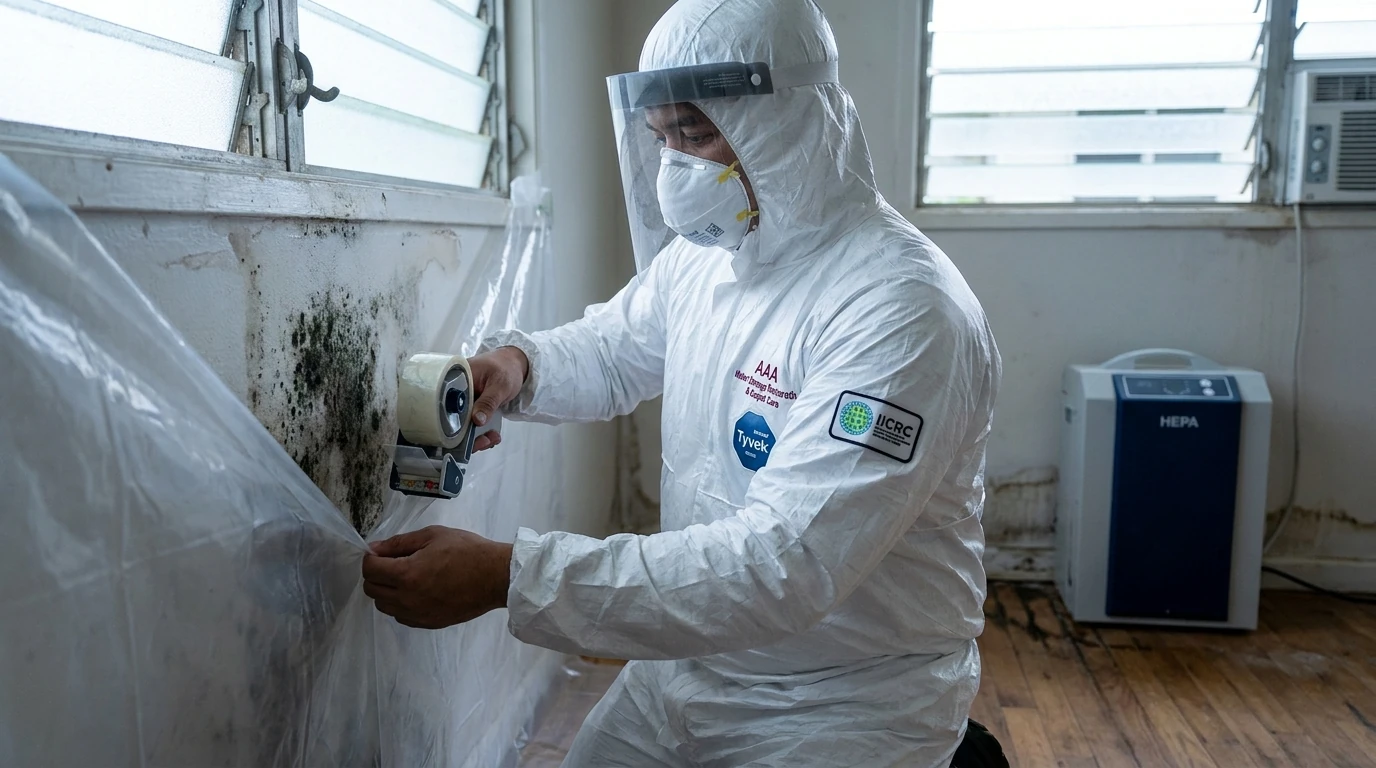
- Containment complexity. A single-room job needs basic poly sheeting and negative air pressure. A job that spans multiple rooms, or runs near occupied living space, needs more barriers, more air scrubbers, and more time.
- Materials affected. Drywall, insulation, and carpet padding with active mold growth generally get removed and bagged for disposal as part of the mitigation scope, not cleaned in place. Removal and disposal add labor and material cost that a surface-level cleaning job doesn’t have.
- HVAC involvement. If spores have moved through the ductwork, decontaminating the system (or isolating and cleaning the affected run) adds a meaningful line item.
- Post-remediation verification. A clearance test, confirming the space passes an independent air or surface sample after the work is done, is a separate line item from the remediation itself. It’s the step that tells you the job actually worked, and it’s worth budgeting for even if a quote doesn’t include it by default. Our mold inspection and testing team handles that verification step separately from remediation, which keeps it independent and credible to an insurer or a buyer’s agent if the property’s being sold.
The EPA’s mold cleanup guidance is a useful baseline for understanding when a job needs professional remediation versus simple cleaning: generally, moldy areas larger than about 10 square feet are past the point where a homeowner should be handling it with bleach and a sponge.
What does whole-house or condo mold remediation typically cost on Oahu?
Whole-house remediation on Oahu often lands on the higher end of the typical range because the mold usually followed a water loss that wasn’t dried fast enough or thoroughly enough the first time. Condo units add their own cost driver: shared wall cavities and shared HVAC systems mean a leak from one unit can show up as mold in a neighbor’s.
Hawaii’s year-round humidity is the real difference-maker here. Mainland comparison quotes often assume drywall and carpet had weeks to slowly develop surface mold. On Oahu, soaked drywall can show visible growth within 24 to 48 hours, which means by the time someone calls, the growth has often already spread past the original wet area into adjoining rooms. If the water loss that caused it was never fully dried to the IICRC S500 water damage standard in the first place, the remediation scope tends to be bigger than the original leak would suggest. We cover that connection in more detail in how quickly mold grows after water damage.
In high-rise condo buildings around Honolulu, a failed supply line or water heater on an upper floor can cascade into units below, and mold remediation there usually involves coordinating with the HOA or AOAO and their insurer in addition to the unit owner. That coordination doesn’t show up as a separate line on the quote, but it does add time, and time is cost.
Does a mold remediation quote include reconstruction or drywall repair?
No, typically not. Mold remediation includes removing affected materials, like contaminated drywall, insulation, or carpet, as part of containing and eliminating the mold itself. It does not include rebuilding those materials, patching, texturing, or painting.
That distinction matters because it’s where price confusion usually happens. A remediation quote covers getting the mold out and the space clean and verified. Putting new drywall back up, matching texture, and repainting is a separate scope of work, generally handled by a licensed general contractor. If your quote includes a demolition and disposal line but stops there, that’s normal and expected, not a sign something’s missing. Ask directly whether reconstruction is included, because not every company draws that line the same way, and you want a written scope that says exactly where the work stops.
Will homeowners insurance cover mold remediation cost?
Sometimes, and it depends almost entirely on what caused the mold. If the mold grew out of a sudden, accidental event, like a burst pipe, most homeowners policies cover remediation under the same claim as the water damage. If the mold resulted from a slow, long-term leak the homeowner could reasonably have caught, insurers typically deny it as a maintenance issue.
This is the same coverage logic that applies to water damage generally. We break down what’s typically covered and what’s typically excluded in does homeowners insurance cover water damage, and the same pattern holds for mold that follows a covered water loss. Documentation matters a lot here: photos, moisture readings, and a clear timeline from the original water event to the mold discovery all strengthen a claim.
What should you ask before accepting a mold remediation quote?
A legitimate quote should name the square footage affected, the containment approach, what materials get removed versus cleaned, and whether post-remediation clearance testing is included. If a quote is a flat number with none of that detail, that’s a reason to ask more questions, not a reason to sign.
Before work starts, ask for a written scope. Ask whether the price includes disposal fees. Ask whether clearance testing is separate (it usually is, and that’s fine, but you should know it going in). And ask what happens if the crew opens a wall and finds more growth than expected, because that’s common enough that a reputable company should have a clear answer ready.
A mold problem rarely gets smaller by waiting. If you’re looking at a stain, a smell, or a damp spot that won’t dry out, the first real step is an inspection, not a guess. Our mold remediation team handles containment and removal across Oahu, and our mold inspection and testing service can confirm what you’re dealing with before any work begins.
About AAA Water Damage Restoration & Carpet Care
AAA Water Damage Restoration & Carpet Care has served Oahu for over 25 years, locally owned and available 24/7. The team handles water damage restoration, flood damage, burst pipe and sewage response, mold remediation and inspection, and carpet and upholstery cleaning across Honolulu, Hawaii Kai, Kailua, Kaneohe, and surrounding communities.